Fingerprint Sensors for Mobile KYC, National ID & Digital Identity in Africa
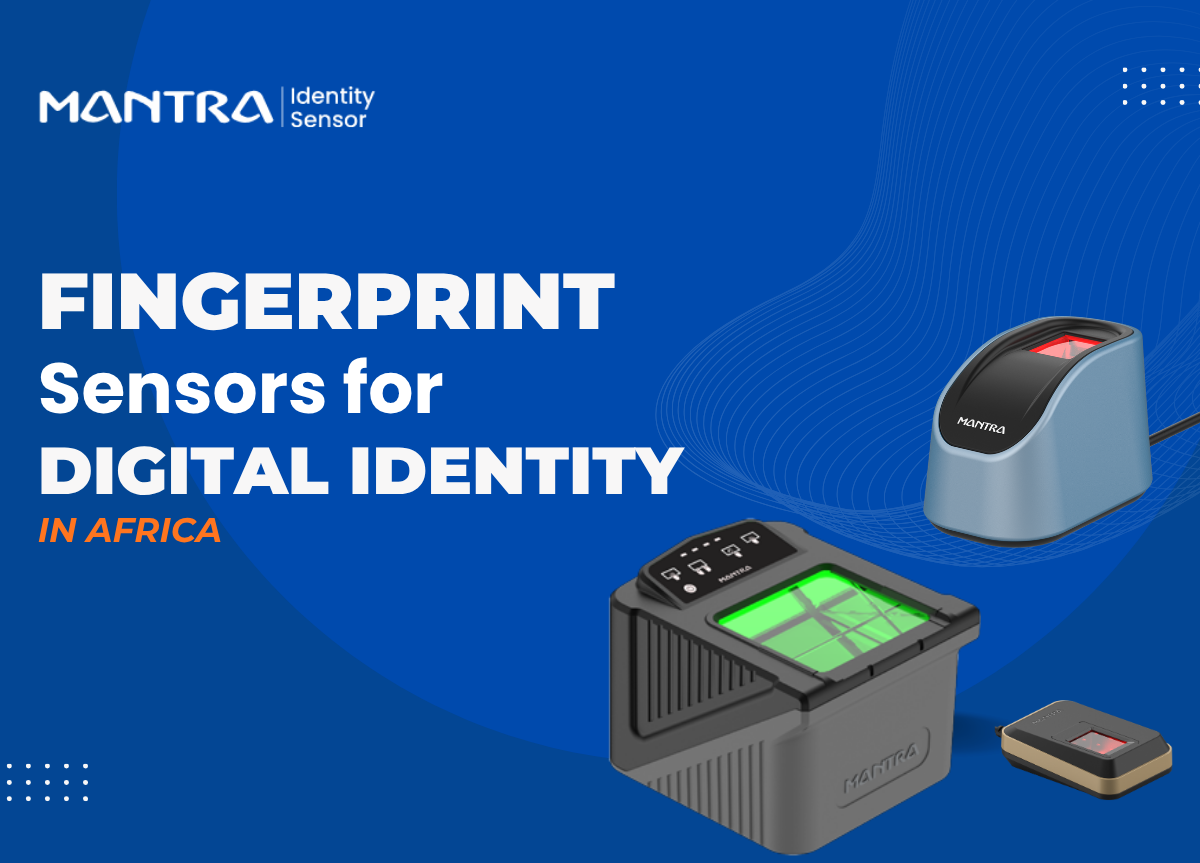
Fingerprint sensors are a core biometric technology for digital identity, mobile KYC, national ID, telecom KYC, field identity verification and OEM applications. Across Africa, governments, System Integrators, telecom operators, financial institutions and technology companies are deploying biometric identity systems that require reliable fingerprint capture across mobile, fixed and field environments.
A fingerprint sensor for digital identity needs to deliver more than image capture. Organizations should evaluate Fingerprint Acquisition Profile (FAP), image quality, biometric standards, MOSIP compatibility, fake-finger detection, connectivity, SDK integration and environmental performance.
This guide explains how fingerprint sensors work, what FAP means, how to select a fingerprint scanner for KYC and national identity, the difference between optical and capacitive fingerprint sensors, and the role of MOSIP and biometric security in modern Sensor Identity systems.
What Is a Fingerprint Sensor?
A fingerprint sensor is a biometric device that captures the unique friction-ridge pattern of a finger and converts it into a digital fingerprint image for biometric processing.
Finger Placement Fingerprint Capture Image Quality Assessment Feature Extraction Template Generation Matching Identity Decision
The fingerprint sensor is the first capture layer of the biometric system. The quality and consistency of the captured fingerprint image can influence subsequent biometric processing and matching.
Fingerprint sensors are commonly used for:
Digital identity
National ID enrollment
Mobile KYC
Telecom KYC
Banking and financial onboarding
Field identity verification
Government service delivery
POS devices
OEM biometric products
How Does a Fingerprint Sensor Work?
A fingerprint sensor captures the ridge and valley patterns of a finger using a sensing technology such as optical or capacitive imaging.
The general biometric process includes:
Fingerprint capture - The sensor acquires the fingerprint image.
Quality assessment - The system evaluates whether the captured image is suitable for biometric processing.
Segmentation - Relevant fingerprint regions are identified.
Feature extraction - Fingerprint characteristics are extracted.
Template generation - A biometric representation is created.
Matching - The fingerprint is compared with a reference template or database.
Identity decision - The system produces a verification or identification result.
For large-scale identity systems, consistent fingerprint acquisition is important because poor-quality samples can increase recapture requirements, enrollment challenges and operator intervention.
What Is FAP in a Fingerprint Scanner?
FAP (Fingerprint Acquisition Profile) defines the type and size of fingerprint acquisition supported by a biometric device.
| FAP | Typical Capture |
|---|---|
| FAP10 | Single-finger capture |
| FAP20 | Larger single-finger capture |
| FAP30 | Larger enrollment-oriented capture |
| FAP40 | One- or two-finger capture |
| FAP45 | One- or two-finger capture with specific Appendix F requirements |
| FAP50 | Up to four-finger capture |
| FAP60 | Larger multi-finger capture |
The highest FAP is not necessarily required for every application. The appropriate fingerprint scanner should be selected according to the enrollment workflow, capture area, biometric standards, application requirements and deployment environment.
Fingerprint Image Quality: Why DPI Is Not Enough
500 DPI is widely used in fingerprint acquisition, but DPI alone does not determine fingerprint image quality.
When evaluating a fingerprint sensor, organizations should consider:
Resolution
Capture area
Ridge definition
Image signal quality
Noise
Dynamic range
Finger condition
Quality assessment
Sensor technology
Applicable biometric standards
A practical fingerprint sensor evaluation should therefore consider:
DPI + Capture Area + Image Quality + Application Performance
rather than resolution alone.
What Is the Difference Between Optical and Capacitive Fingerprint Sensors?
Optical Fingerprint Sensors
Optical fingerprint sensors use an imaging system to capture fingerprint patterns.
They are commonly used for:
National ID
Digital identity
KYC
Biometric enrollment
Government applications
Mobile and fixed biometric devices
Capacitive Fingerprint Sensors
Capacitive fingerprint sensors capture fingerprint characteristics using electrical properties.
They are often suitable for:
Compact biometric devices
Embedded OEM products
POS hardware
Space-constrained applications
Low-power biometric designs
The appropriate sensing technology depends on the application, capture requirements, form factor, integration environment and operating conditions.
Fingerprint Sensors for Mobile KYC
A fingerprint scanner for mobile KYC enables biometric identity verification outside traditional enrollment centers.
Customer Fingerprint Sensor Mobile Device KYC Application Identity Platform Verification Result
A fingerprint sensor for mobile KYC may need to support:
Compact design
USB or wireless connectivity
Android and other supported operating systems
SDK/API integration
Fingerprint quality assessment
Secure device communication
Device identification
Reliable field operation
In Africa, mobile biometric KYC can support:
Financial services
Agent banking
Microfinance
Telecom onboarding
Customer onboarding
Digital financial inclusion
Field identity verification
Fingerprint Sensors for National ID and Digital Identity
A fingerprint scanner for national ID can be used to capture biometric information during identity enrollment or verification.
Enrollment Device Fingerprint Capture Quality Assessment Biometric Processing Identity Platform Identity Record
Key technical requirements may include:
FAP profile
Fingerprint image quality
Biometric standards
Enrollment capability
1:1 verification
1:N identification
SDK/API
Device security
Interoperability
Device management
Scalability
For government deployments, the fingerprint sensor should be evaluated as part of the complete identity architecture rather than as an independent hardware component.
MOSIP and Fingerprint Sensors for Digital Identity
MOSIP (Modular Open Source Identity Platform) is an open-source platform designed to support large-scale digital identity systems.
Fingerprint sensors used in MOSIP-based identity systems need to work with the applicable Biometric Service Provider / SBI architecture, capture requirements and device integration framework.
When evaluating a MOSIP fingerprint sensor, organizations should consider:
MOSIP version
SBI requirements
Device integration
Fingerprint image quality
Biometric standards
Device security
Communication architecture
Application workflow
Device management
MFS500 MX and MELO31 provide MOSIP-related integration capabilities for digital identity applications, subject to the applicable product configuration and project requirements.
For a MOSIP deployment, organizations should confirm the latest approved device compatibility, SBI requirements and project-specific integration requirements before implementation.
Fingerprint Sensors for Telecom KYC
A fingerprint sensor for telecom KYC can be integrated into subscriber registration and identity verification workflows.
Subscriber Fingerprint Capture KYC Application Identity Verification Subscriber Registration
Applications include:
SIM registration
Subscriber onboarding
Telecom KYC
Agent-based registration
Identity verification
Mobile onboarding
For field telecom deployments, sensor selection should consider portability, connectivity, biometric quality, security and environmental conditions.
Fingerprint Sensors for Field KYC
Field identity verification introduces conditions that may not exist in controlled environments.
A field fingerprint scanner may encounter:
Wet fingers
Dry skin
Sweat
Worn fingerprints
Dust
Outdoor lighting
Temperature variations
Limited connectivity
Limited power
Frequent transportation
High user volumes
These considerations are particularly relevant to:
Agent banking
Financial inclusion
Telecom registration
Government services
Field identity verification
Mobile KYC
MELOxx Fingerprint Sensors for Wet Finger and Challenging Conditions
Real-world biometric capture can involve challenging finger conditions.
The MELOxx series is designed for demanding fingerprint capture applications and can be evaluated for challenging conditions depending on the specific model and configuration.
Highly Wet Finger Capture
High moisture on a finger can affect fingerprint image quality and ridge capture.
MELOxx series devices can be considered for applications requiring challenging wet-finger capture, subject to the specific model, configuration and test conditions.
Underwater Finger Capture
For specialized applications involving underwater fingerprint capture, the applicable MELOxx model and configuration should be evaluated against the required operating conditions and R&D-approved test results.
The exact performance should be validated for the selected device, environment and application before production deployment.
Fake-Finger Detection in Biometric Identity Systems
Fake-finger detection is an important biometric security consideration where presentation attacks or artificial fingerprint attempts need to be addressed.
Depending on the product model and approved configuration, fingerprint sensors may incorporate capabilities such as:
Fake-finger detection
Live-finger detection
Latent detection
Spoof detection
Fingerprint quality assessment
Automated capture
These capabilities can be relevant to:
National ID
Digital identity
Mobile KYC
Telecom KYC
Financial onboarding
Field identity verification
For deployments requiring formal Presentation Attack Detection (PAD), organizations should verify the applicable ISO/IEC 30107-3 testing, certification and product configuration.
Mantra Fingerprint Sensor Portfolio for Digital Identity Applications
Mantra's fingerprint sensor portfolio covers different fingerprint acquisition profiles, sensing technologies, security capabilities and integration requirements for identity-focused applications.
Key application areas include:
Government ID and Digital Public Infrastructure
National identity
Mobile KYC
Telecom KYC
System Integrators
POS and OEM
Field identity verification
Digital onboarding
Mantra Fingerprint Sensor Comparison
| Product | Technology / FAP | Key Capture Specifications | Key Features | MOSIP / Security | Connectivity |
|---|---|---|---|---|---|
| MFS500 | Optical / FAP10 | 500 DPI; 296 * 354 px; 16.4 * 20.0 mm platen | Auto finger detection; biometric quality processing | FBI PIV | USB 2.0 |
| MFS500 MX | Optical / FAP10 | 500 DPI; 296 * 354 px; 16.4 * 20.0 mm platen | Auto finger detection; secure architecture | MOSIP, FBI PIV, MINEX, hardware cryptography | USB 2.0 |
| MELO20 | Optical / FAP20 | 500 DPI; 300 * 400 px; 15.24 * 20.32 mm platen | Auto capture; latent detection; rugged design | Security capabilities subject to configuration | USB / Embedded |
| MELO21 | Optical | Variant-specific | Auto capture and biometric security capabilities | MOSIP / security capabilities subject to approved configuration | Configuration dependent |
| MELO20 BL | Optical | Variant-specific | Wireless biometric integration | Security capabilities subject to approved configuration | Bluetooth / configuration dependent |
| MELO30 | Optical / FAP30 | 500 DPI; 400 * 500 px; 20.32 * 25.40 mm platen | Latent detection; spoof detection; auto capture | Fake-finger detection; ISO/IEC 30107-3 related capability | USB 2.0 |
| MELO31 | Optical / FAP30 | 500 DPI; 400 * 500 px; 20.32 * 25.40 mm platen | Latent detection; 360° rotation; auto capture | MOSIP-L1 SBI compliant; fake-finger detection; FBI PIV; MINEX | USB 2.0 |
| MORPHS | Optical / FAP60 | 500 DPI; 1600 * 1500 px; 4-4-2 and rolled | Multi-fingerprint capture; live-finger detection; NFIQ | Live-finger / presentation attack capabilities | USB 2.0 |
| MARC10 | Capacitive / FAP10 | 500 DPI; 256 * 360 px; 12.8 * 18 mm sensing | Compact OEM design; latent detection | Biometric security capabilities | USB 2.0 / SPI / UART |
| MARC10 BL | Capacitive | Configuration dependent | Compact biometric integration | Security capabilities subject to approved configuration | Bluetooth / configuration dependent |
Note: Product specifications, certifications, MOSIP compatibility, fake-finger detection capabilities and interfaces should be confirmed against the latest approved product datasheet and project configuration.
Fingerprint Sensors for POS and OEM Applications
Fingerprint sensors can be embedded into OEM and POS hardware to create biometric-enabled products.
Common applications include:
POS terminals
KYC terminals
Handheld devices
Biometric tablets
Government kiosks
Field-service terminals
Enrollment equipment
Identity verification hardware
OEM integration may involve:
USB
SPI
UART
Bluetooth where supported
SDK/API
Device drivers
Operating system support
Firmware
Mechanical integration
Electrical integration
Biometric data formats
For OEMs and System Integrators, the fingerprint sensor becomes an embedded Sensor Identity component within a larger identity product.
How to Choose the Right Fingerprint Scanner for KYC and Digital Identity
When selecting a fingerprint scanner for KYC, national ID or digital identity, evaluate the following areas.
1. Application
Identify whether the sensor will be used for:
National ID
Mobile KYC
Telecom KYC
Field verification
Enrollment
POS
OEM integration
Authentication
2. Capture Profile
Select the required FAP according to the biometric workflow and capture requirements.
3. Image Quality
Evaluate:
Resolution
Capture area
Ridge quality
Image quality
Performance across different finger conditions
4. MOSIP Compatibility
For MOSIP deployments, verify:
SBI compatibility
Supported MOSIP version
Device integration
Complete application architecture
5. Fake-Finger Detection
For applications requiring presentation attack protection, verify the specific fake-finger detection capability, applicable testing and approved product configuration.
6. Connectivity
Consider:
USB
SPI
UART
Bluetooth
depending on the selected product and configuration.
7. Environmental Performance
Evaluate:
Temperature
Humidity
Moisture
Dust
Outdoor lighting
Finger condition
Device handling
8. Software Integration
Confirm:
SDK
API
Drivers
Operating system
Application compatibility
9. Scalability
Consider:
Device management
Lifecycle
Maintenance
Deployment volume
Integration requirements
Fingerprint Sensor Technical Checklist
| Technical Area | What to Evaluate |
|---|---|
| Sensor Technology | Optical / Capacitive |
| Capture Profile | FAP10 / FAP20 / FAP30 / FAP60 |
| Resolution | DPI and image dimensions |
| Capture Area | Platen and sensing area |
| Image Quality | Ridge definition, noise and quality assessment |
| Acquisition | Auto detection / auto capture |
| Security | Fake-finger / presentation attack detection |
| Standards | ISO / FBI / ANSI / FAP |
| Compression | WSQ / JPEG2000 where required |
| MOSIP | SBI and integration requirements |
| Connectivity | USB / SPI / UART / Bluetooth |
| Software | SDK / API / Drivers |
| Operating Systems | Windows / Linux / Android, as applicable |
| Environment | Temperature / humidity / dust / moisture |
| Integration | Mechanical / electrical / firmware |
| Lifecycle | Durability / maintenance / deployment scale |
Why Fingerprint Image Quality Matters for Identity Verification
Fingerprint image quality affects the ability of biometric systems to extract useful fingerprint information and perform matching.
Poor-quality fingerprint samples can lead to:
Additional capture attempts
Enrollment difficulties
Increased rejection
Operator intervention
Poor user experience
Reduced matching performance
The complete biometric chain should therefore be considered:
Sensor Fingerprint Image Quality Assessment Biometric Processing Matching Identity Decision
This makes fingerprint image quality an important consideration when selecting a sensor for national ID, KYC, telecom or other identity applications.
Building a Scalable Sensor Identity Ecosystem
A scalable fingerprint identity architecture can include:
Fingerprint Sensor Capture SDK Application Identity Platform Biometric Engine Identity Decision
Additional components may include:
Enrollment management
Device management
Identity database
KYC platform
Government identity platform
Telecom systems
POS systems
API gateway
Security services
Monitoring and reporting
This positions the fingerprint sensor as an important component of a broader Sensor Identity ecosystem.
Role of System Integrators in Digital Identity
System Integrators connect biometric sensors with complete identity and application platforms.
Government
National ID
Digital identity
Government enrollment
Identity verification
Digital Public Infrastructure
Telecom
Subscriber KYC
SIM registration
Agent onboarding
Identity verification
Financial Services
Mobile KYC
Agent banking
Customer onboarding
Microfinance
Field verification
OEM
POS devices
KYC terminals
Handheld devices
Biometric tablets
Government kiosks
Identity hardware
This creates an ecosystem where sensor manufacturers, OEMs and System Integrators can develop complete biometric identity solutions.
Fingerprint Sensor Opportunities in Africa
Africa's expanding digital identity ecosystem creates opportunities across several application areas.
Government ID and Digital Public Infrastructure
Fingerprint sensors can support biometric enrollment and identity verification within national and digital identity ecosystems.
System Integrators
System Integrators can integrate fingerprint sensors with government identity, KYC, telecom and financial platforms.
POS and OEM
OEMs can integrate compact biometric sensors into POS terminals, handheld devices and identity-enabled hardware.
Telecom KYC
Fingerprint biometrics can support subscriber onboarding and identity registration.
Field KYC
Mobile fingerprint devices can support financial inclusion, agent banking, government services and field identity verification.
Across these applications, the common architecture is:
Biometric Sensor + Capture Application + Integration + Identity Platform
Frequently Asked Questions About Fingerprint Sensors
What is a fingerprint sensor?
A fingerprint sensor is a biometric device that captures a person's fingerprint pattern and converts it into a digital image or biometric representation for identity verification or identification.
How do you choose a fingerprint sensor for mobile KYC?
Consider the required capture profile, image quality, connectivity, operating system, security requirements, SDK/API, device form factor and field operating conditions. The selected sensor should match the application's technical and integration requirements.
What is FAP in a fingerprint scanner?
FAP stands for Fingerprint Acquisition Profile. It defines the type and size of fingerprint acquisition supported by a biometric device, such as FAP10, FAP20, FAP30 or FAP60.
What is MOSIP in digital identity?
MOSIP stands for Modular Open Source Identity Platform. It is an open-source platform designed to support large-scale digital identity systems. Fingerprint sensors used with MOSIP need to meet the applicable biometric service and integration requirements.
What is fake-finger detection?
Fake-finger detection is a biometric security capability designed to detect attempts to present an artificial fingerprint or other presentation attack during biometric capture.
Can fingerprint sensors capture wet fingers?
Fingerprint capture performance can vary with finger moisture and sensor technology. MELOxx series devices can be evaluated for challenging wet-finger capture, with performance depending on the specific model, configuration and test conditions.
Can a fingerprint sensor capture a finger underwater?
Specialized MELOxx series configurations can be evaluated for underwater fingerprint capture. The selected model should be validated against the required underwater environment and latest R&D-approved test results before deployment.
What standards are important for fingerprint scanners?
Depending on the application, relevant standards may include:
ISO/IEC 19794-2
ISO/IEC 19794-4
ANSI/INCITS 378
FBI PIV
FBI Appendix F
WSQ
JPEG2000
ISO/IEC 29794-4
The applicable standards depend on the biometric workflow and project requirements.
What should OEMs consider when integrating a fingerprint sensor?
OEMs should evaluate sensor size, sensing technology, interface, power requirements, SDK, operating system, biometric formats, environmental performance, security, firmware and mechanical/electrical integration.
What is the difference between optical and capacitive fingerprint sensors?
Optical sensors capture fingerprint patterns through an imaging system, while capacitive sensors use electrical characteristics to capture fingerprint information. The appropriate technology depends on the application, form factor, capture requirements and integration environment.
Conclusion
Fingerprint sensors are a fundamental component of modern Sensor Identity, digital identity and biometric verification systems.
The growth of mobile KYC, national ID, Digital Public Infrastructure, telecom KYC, field identity verification and OEM biometric solutions in Africa is creating demand for fingerprint sensors that combine reliable image capture, biometric standards, security, MOSIP integration, connectivity and real-world environmental performance.
Mantra's fingerprint sensor portfolio includes:
MFS500, MFS500 MX, MELO20, MELO21, MELO20 BL, MELO30, MELO31, MORPHS, MARC10 and MARC10 BL.
The appropriate fingerprint scanner should be selected based on:
Capture Profile + Image Quality + Standards + MOSIP Requirements + Fake-Finger Detection + Connectivity + Security + Environment + Integration + Scalability
For demanding biometric applications, the MELOxx series can be evaluated for challenging conditions, including highly wet-finger capture and specialized underwater fingerprint capture, subject to model-specific validation and approved test conditions.
Sensor Identity is the foundation. Integration makes it scalable.